
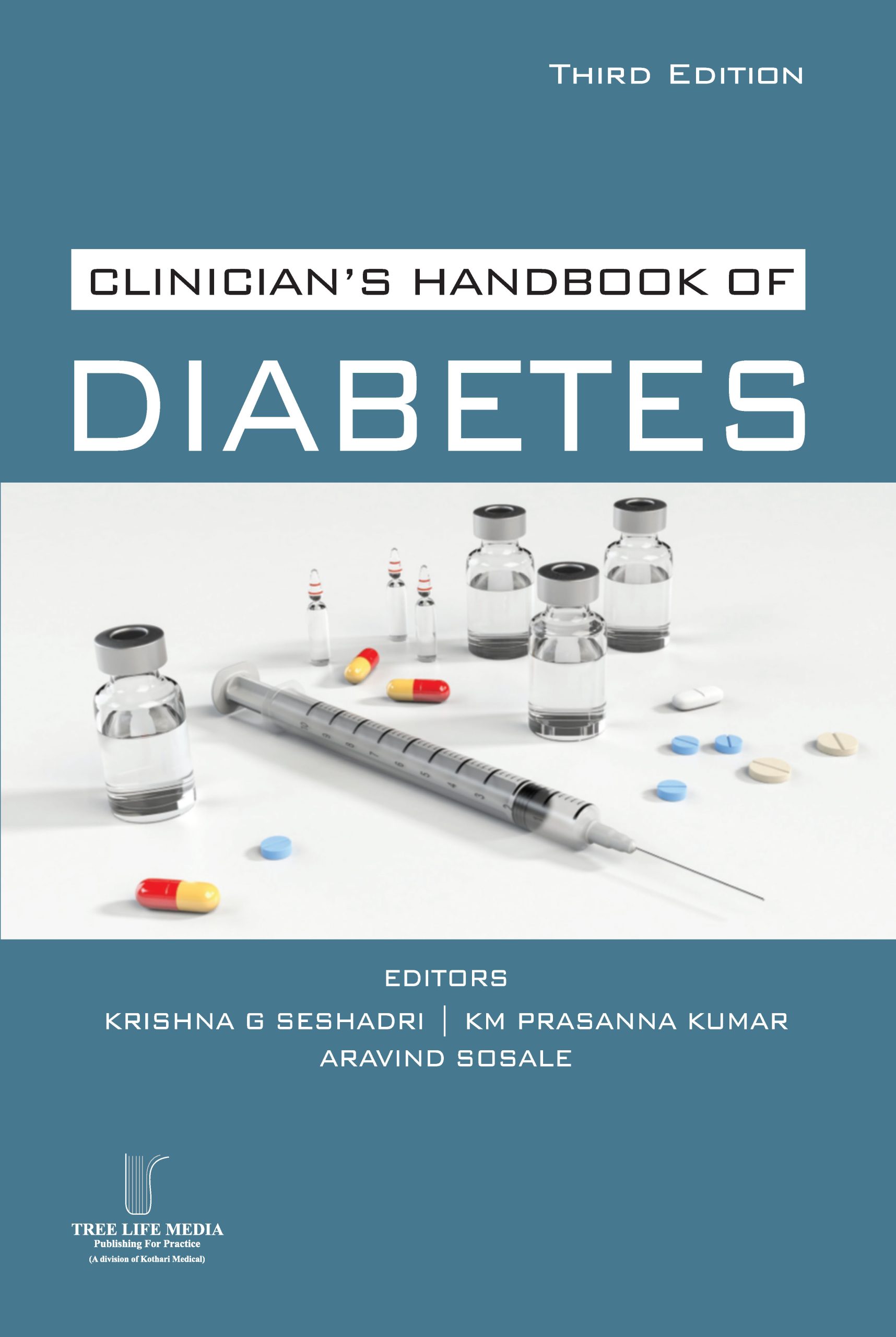
Case -based approach is one of the most used and most effective formats to present medical information and is the foundation for developing evidence – based treatment protocols. In its third edition, the Clinician’s Handbook of Diabetes Mellitus covers a wide range of case studies in diabetology with each case including history, investigations, differential diagnosis and discussion, critique, practice points as well as references.
Clinician’s Handbook of Diabetes 3/Ed.
₹675.00
Case -based approach is one of the most used and most effective formats to present medical information and is the foundation for developing evidence – based treatment protocols. In its third edition, the Clinician’s Handbook of Diabetes Mellitus covers a wide range of case studies in diabetology with each case including history, investigations, differential diagnosis and discussion, critique, practice points as well as references.
| Weight | 1000 kg |
|---|---|
| Dimensions | 20 × 14 × 4 cm |
Customer Reviews
There are no reviews yet.
Related products
-

Puzzling Cases in Nephrology
₹2,295.00This Unique book provides a glimpse of how medical mysteries can be solved, or if not solved, atleast better understood. There is much in this book that will not easily be found in modern textbooks, as this to me organizes information around case examples rather than organizing facts around disease entities. In this book cases of renal diseases and kidney transplantation of particular diagnostic or therapeutic interest have been selected. This is an essential read for Nephrologists in practice and training and all those interested in care for a Renal patient
-
-

COVID – 19 VACCINES A Comprehensive Overview
₹1,595.00We are amid a pandemic that continues to smoulder almost everywhere with raging fire off and on at different places. It has not only devastated hundreds of thousands of families who lost someone to the virus and affected over 300 million people directly, it has affected all 7.9 billion of us in some way or other. At the same time, humanity has risen well to the pandemic challenges. It was realized very early during the current outbreal that safe and effcacious vaccines would be crucial in tackling the pandemic. The unprecedented global collaboration among all stakeholders: Scientists, pharmaceutical industry, funding agencies and Governments demonstrated what a global will could do: hundreds of vaccine candidates developed, and vaccine deployment started within 12 months of isolation of new virus something that takes over a decade otherwise.
-
Puzzling Cases in Stroke Vol. 2
₹1,695.00Stroke is a treatable medical emergency affecting about 15 million people every year worldwide. It is the most common cause of common cause of disability globally and is the third most common cause of death. In the present times, there are effective treatment options which if given timely will benefit the patients of stroke remarkably. Therefore, correct diagnosis of acute stroke is extremely important for the clinicians to provide appropriate treatments and to ensure prevention of acute complications, including recurrent strokes. But sometimes a typical or uncommon presentation of stroke or “stroke chameleons”can lead to diagnostic dilemma. Therefore, timely diagnosis and management may be delayed. There are time – tested strategies which when strictly followed by the Neurphysician can reduce the chances of missing the correct diagnosis. Firstly, “Listen very carefully to the patient. He is telling you the diagnosis.” Clinicians should suspect stroke when the history suggests abrupt onset of neurological symptoms. Remember, Stroke is a clinical diagnosis and imaging is providing the corroboratory evidence. Secondly, a complete and systematic neurological examination should be routinely done in patients presenting with acute neurological symptoms because this might shed light on the true nature of the problem. Finally, even the most sophisticated neuroimaging tests might miss the stroke in the early hours after the event.
-

EEG Simplified
₹1,255.00EEG Simplified is an interesting and informative book, it has been written in simple english and discusses various aspects of electrophysiology with clarity. Beginning with basic recording concepts of EEG and the descriptions of normal EEG, the authors take us through artifacts, a very important chapter and then discuss electroencephalographic abnormalities seen in variety of neurological disorders. This kind of book on clinical neurophysiology is extremely useful for day to day clinical practice.
-
Manual of Clinical Endocrinology 2/Ed.
₹995.00Algorithms provide a logical, concise and cost-effective approach to medical reasoning: utilizing a concise, step-by-step approach based upon clues from the history, physical examination and laboratory studies, algorithms help avoid excessive unnecessary procedures and testing. The 2nd edition of Manual of Clinical Endocrinology deals with practical issues ranging from simple thyroid function testing and thyrotoxicosis to approaching a patient with suspected thyrotoxicosis. Algorithms are simple and effective tools for the practitioner in a hurry and since the majority of the intended audience, physicians, general practitioners and postgraduates have very little time amidst their busy clinical routine, this manual uses algorithms. Twenty-two clinical issues are covered by an algorithmic approach, breaking down long lists and tables of differential diagnosis into smaller, more manageable ones. Common clinical symptoms, signs and laboratory abnormalities are classified as they present themselves at the patient’s bedside. This manual is an attempt to provide the busy practitioner with a desktop reckoner which will be useful while approaching a patient with a suspected endocrine problem. The authors have strived to be practical not pedantic – at the same time have made great effort to ensure that the recommendations are evidence based.
-
Current Progress in Nephrology Volume 2
₹1,500.00The aim of the 2nd volume of this book is to address the basic concepts and newer developments in selected areas of clinical nephrology, dialysis and renal transplantation. Selected topics on interest with reference to recent developments, updated classifications or advances in pathogenesis and treatment. Nephrologists from around the world have contributed to this one of its kind book.
-

HANDBOOK OF DERMATOLOGIC DRUG THERAPY 2/Ed. Revised & Updated
₹1,495.00Dermatology is a branch of medicine which relies heavily on outpatient treatment and also managing several incapacitating diseases as inpatients. The load of patients in any dermatology OPD is ever increasing, thanks to the recent awareness about the dermatological diseases. The role of a Dermatologist is complicated and quite demanding with reference to innumerable diseases that he has to deal with. Added to this, he is also expected to be well versed with all the drugs that he prescribes, what with constant addition of newer drugs. It is humanly impossible to remember and recollect the various indications, dosages, formulations, side effects and mechanism of actions of all the drugs that he is suppose to use. Another perennial threat is that posed by drug interactions. Books available on this subject are either very exhaustive or less informative. Handbook of Dermatologic Drug Therapy is published is an attempt to bridge this gap. In this second edition, newer therapies like biologics has been added. Each chapter has been updated to add the recent advances. The book is designed and written in a simple language and is not pocket heavy. The target readers are undergraduate, postgraduate and the practicing dermatologists alike. The contents of the book follow a standard format like chemical structure, mechanism of action, pharmacokinetics, indications, contraindications, side effects. Two other highlights of this book are prescription pearls and important drug interactions.

Be the first to review “Clinician’s Handbook of Diabetes 3/Ed.”