
| Weight | 870 kg |
|---|---|
| Dimensions | 24.9 × 17.6 × 1.9 cm |

Current Progress in Neurosurgery Volume 2
₹4,995.00
Customer Reviews
There are no reviews yet.
Related products
-
-

Clinician’s Handbook of Diabetes 3/Ed.
₹675.00Case -based approach is one of the most used and most effective formats to present medical information and is the foundation for developing evidence – based treatment protocols. In its third edition, the Clinician’s Handbook of Diabetes Mellitus covers a wide range of case studies in diabetology with each case including history, investigations, differential diagnosis and discussion, critique, practice points as well as references.
-

CARDIAC MRI Simplified CONCISE GUIDE
₹625.00Who Will benefit from this book? * Genuine interest in cardiovascular imaging * International certification exams * Enhancing skills in interpretations of cardiac MR Why this format? * Salient points, easier and faster to read. * Questions-answer approach for better understanding of topic. * Short and well contained guide. What are the highlights of the book? * Comprehensive coverage of all topics * Appropriate illustrations * Inclusion of recent advances
-

Puzzling Cases in Stroke
₹1,250.00Stroke is the leading cause of permeant disability , including post stroke dementia, pain, depression and personality changes. While large Clinical Trials reflect information about large stroke populations, the presentation of each and every stroke patient is individual and special. Currently there are only few books which illustrate case oriented discussion. This is unique book which includes common and unusual case of stroke, so as to reinforce diagnostic skills through careful analysis of individual presenting patterns, and to guide treatment decisions.
-

EMG Simplified
₹3,250.00ABOUT THE BOOK – A concise book for practical Electroneuromyography What is it for? Electrodiagnosticians Neurology trainees Neurology practitioners Orthopedic and hand surgeons Physicians Technologists COVERS Technical as well as neurological aspects Troubleshooting paradigms Approach based on presenting symptoms Disease based discussions Considerations about the common and the uncommon Case Studies
-
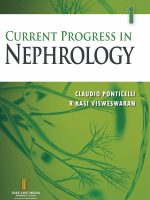
Current Progress In Nephrology Volume 1
₹1,500.00The aim of the book is to address the basic concepts and newer developments in selected areas of clinical nephrology, dialysis and renal transplantation. Selected topics on interest with reference to recent developments, updated classifications or advances in pathogenesis and treatment. Nephrologists from around the world have contributed to this one of its kind book.
-

Current Progress in Orthopedics Volume 2
₹1,500.00This textbook represents the second text from the Editors who have invited a panel of distinguished authors with international reputations to present the current state of the art in orthopedic surgery. There is more awareness of musculoskeletal disease as a cause of disability in every country and as governments and non-governmental organizations move to address this problem there is increasing recognition of the importance of orthopedic surgery in dealing with musculoskeletal disease. The entire spectrum from congenital abnormalities through pediatric musculoskeletal illness, trauma, sports and degenerative diseases have been covered in this volume. This is the companion volume to the first published two years ago and we anticipate further volumes in the future as we attempt to address the ever expanding role of orthopedic surgery in modern healthcare.
-

Clinical Pediatric Dermatology
₹1,350.00This book aims at bridging that gap and putting the basic concepts of pediatric dermatology together which help the dermatologists,post graduates and pediatricians understand and manage the pediatric dermatoses in India. With primary focus on beginners in pediatric dermatology and pediatricians,the conciseness and brevity of clinical notes has not been compromised. This book has been written keeping in view the interests of both pediatric dermatologists and pediatricians. In this era of sub-specialization, general pediatricians who offer primary care to children must be knowledgeable in pediatric dermatological problems.

Be the first to review “Current Progress in Neurosurgery Volume 2”