
This is the first revision guide to map directly to the new structure of the FRCR Final Part S examination (CR2A). Spanning a broad range of topics, the book follows the core clinical radiology curriculum, covering all modalities. It is divided into 7 test papers, consisting of I20 mixed SBA – type questions with detailed answers in sequential order. Every answer is followed by a short explanation and relevant discussion around the topic with appropriate references. Each paper should take three hours to complete. Delivering over 20 hours of focused exam practice, this guide is a sound investment for trainee radiologists preparing for their Final Part A exam.
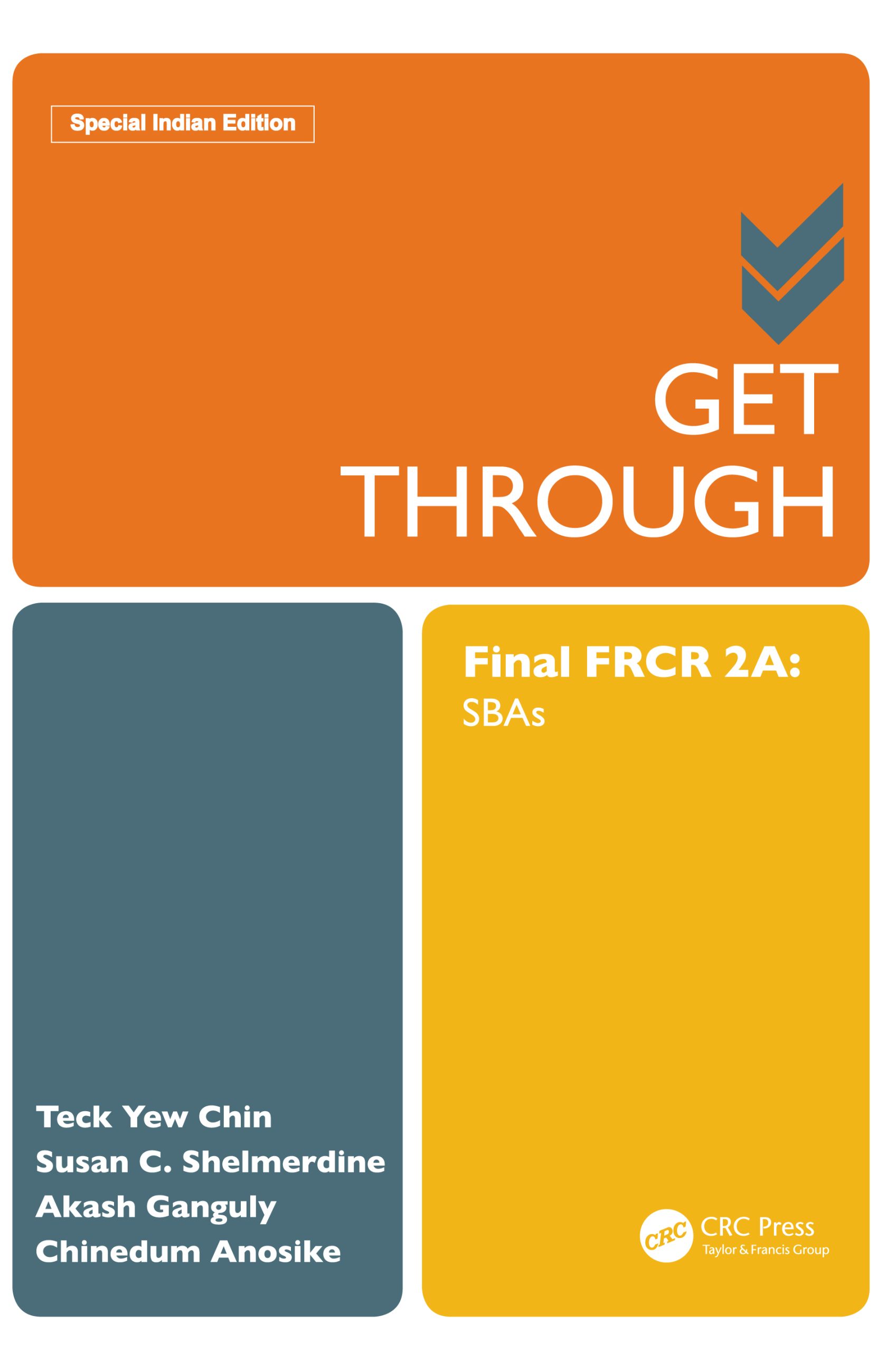
Get Through Final FRCR 2A: SBAs 1st/2017 (Reprint 2020)
₹1,195.00
| Dimensions | 20 × 14 × 4 cm |
|---|
Customer Reviews
There are no reviews yet.
Related products
-

Puzzling Cases in Nephrology
₹2,295.00This Unique book provides a glimpse of how medical mysteries can be solved, or if not solved, atleast better understood. There is much in this book that will not easily be found in modern textbooks, as this to me organizes information around case examples rather than organizing facts around disease entities. In this book cases of renal diseases and kidney transplantation of particular diagnostic or therapeutic interest have been selected. This is an essential read for Nephrologists in practice and training and all those interested in care for a Renal patient
-
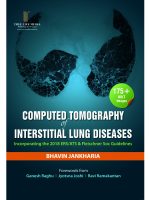
Computed Tomography of Interstitial Lung Diseases
₹1,295.00Computed Tomography of Interstitial Lung Diseases is an easy to read book written by Dr. Bhavin Jankharia that incorporates the 2018 Fleischner Society and ERS/ATS guidelines for IPF. With 175 illustrations, the book is already very popular with radiologists and pulmonologists alike and serves as a ready reference when reading CT scans of ILDs
-
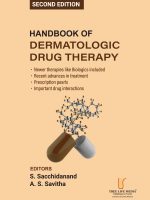
HANDBOOK OF DERMATOLOGIC DRUG THERAPY 2/Ed. Revised & Updated
₹1,495.00Dermatology is a branch of medicine which relies heavily on outpatient treatment and also managing several incapacitating diseases as inpatients. The load of patients in any dermatology OPD is ever increasing, thanks to the recent awareness about the dermatological diseases. The role of a Dermatologist is complicated and quite demanding with reference to innumerable diseases that he has to deal with. Added to this, he is also expected to be well versed with all the drugs that he prescribes, what with constant addition of newer drugs. It is humanly impossible to remember and recollect the various indications, dosages, formulations, side effects and mechanism of actions of all the drugs that he is suppose to use. Another perennial threat is that posed by drug interactions. Books available on this subject are either very exhaustive or less informative. Handbook of Dermatologic Drug Therapy is published is an attempt to bridge this gap. In this second edition, newer therapies like biologics has been added. Each chapter has been updated to add the recent advances. The book is designed and written in a simple language and is not pocket heavy. The target readers are undergraduate, postgraduate and the practicing dermatologists alike. The contents of the book follow a standard format like chemical structure, mechanism of action, pharmacokinetics, indications, contraindications, side effects. Two other highlights of this book are prescription pearls and important drug interactions.
-
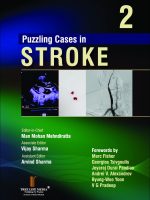
Puzzling Cases in Stroke Vol. 2
₹1,695.00Stroke is a treatable medical emergency affecting about 15 million people every year worldwide. It is the most common cause of common cause of disability globally and is the third most common cause of death. In the present times, there are effective treatment options which if given timely will benefit the patients of stroke remarkably. Therefore, correct diagnosis of acute stroke is extremely important for the clinicians to provide appropriate treatments and to ensure prevention of acute complications, including recurrent strokes. But sometimes a typical or uncommon presentation of stroke or “stroke chameleons”can lead to diagnostic dilemma. Therefore, timely diagnosis and management may be delayed. There are time – tested strategies which when strictly followed by the Neurphysician can reduce the chances of missing the correct diagnosis. Firstly, “Listen very carefully to the patient. He is telling you the diagnosis.” Clinicians should suspect stroke when the history suggests abrupt onset of neurological symptoms. Remember, Stroke is a clinical diagnosis and imaging is providing the corroboratory evidence. Secondly, a complete and systematic neurological examination should be routinely done in patients presenting with acute neurological symptoms because this might shed light on the true nature of the problem. Finally, even the most sophisticated neuroimaging tests might miss the stroke in the early hours after the event.
-
Current Progress In Nephrology Volume 1
₹1,500.00The aim of the book is to address the basic concepts and newer developments in selected areas of clinical nephrology, dialysis and renal transplantation. Selected topics on interest with reference to recent developments, updated classifications or advances in pathogenesis and treatment. Nephrologists from around the world have contributed to this one of its kind book.
-

Textbook and Atlas of Dermatology 2nd Ed.
₹3,995.00Salient Features :
1) Comprehensive visual guidance you need to effectively evaluate, diagnose and manage all forms of skin disease. over 200 images richly depict etiology, clinical features, diagnosis and treatment, equipping you to provide the best care to every patient. 2) More than 40 chapters covering all dermatological ailments. 3) More than 200 illustrations from the Author’s personal database giving a unique overview of the diseases. 4) Hands – on clinical experience sharing in the form of cases, clinical presentations and management approach.
Be the first to review “Get Through Final FRCR 2A: SBAs 1st/2017 (Reprint 2020)”