
Now in its 6th edition, Handbook of Drugs in intensive Care is the essential guide to using drugs safely and effectively in the intensive care setting. The book is split into two Sections – an A-Z guide to the drugs available, and concise notes on the topics and situations faced on a daily basis. The A-Z section provides succinct information on each drug including uses, limitations, administration directions and adverse effects. The second section details practice guidelines such as insulin therapy, Parkinson’s disease therapy when nil-by-mouth and drug dosing in renal failure.
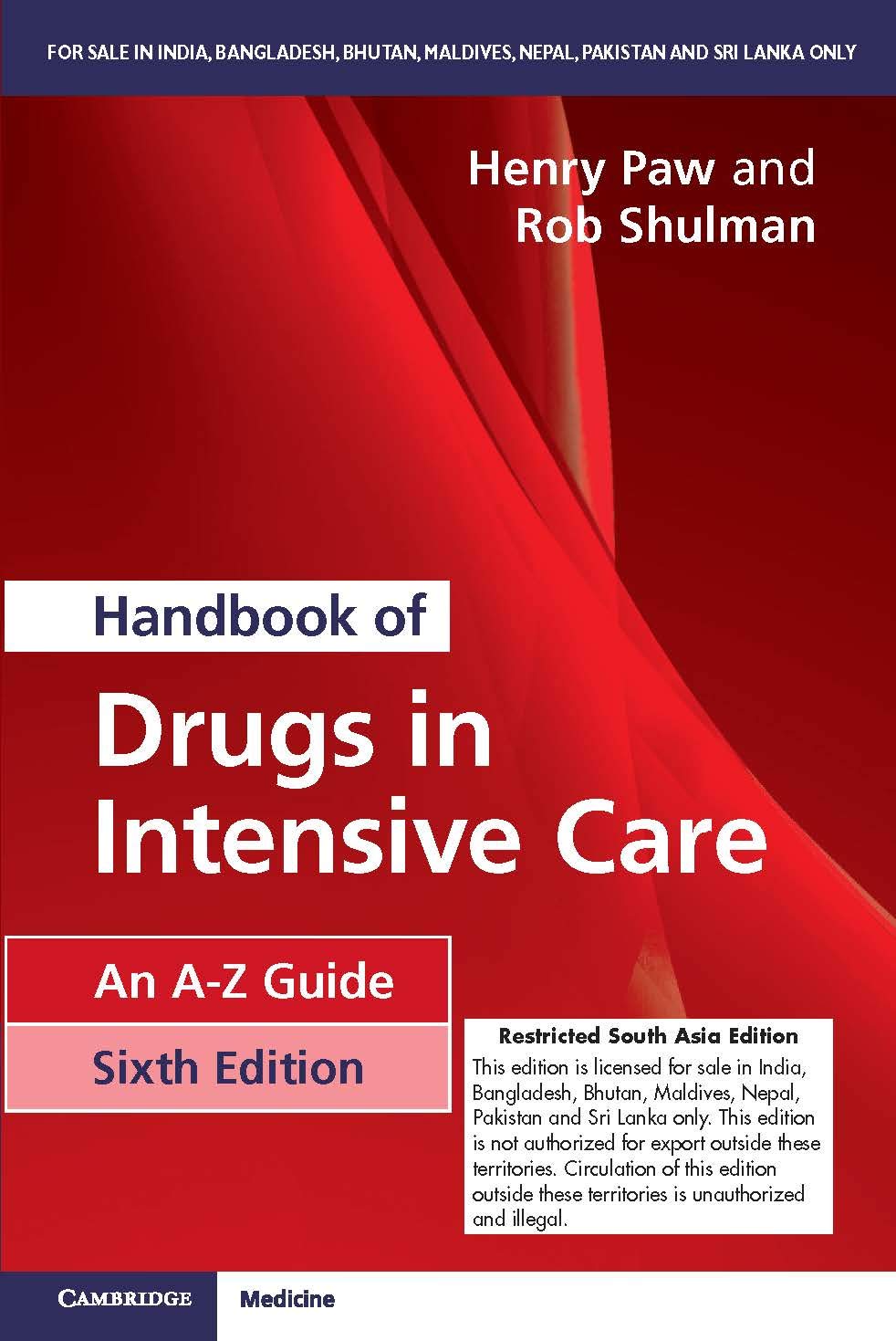
Handbook of Drugs in Intensive Care 6/Ed.
₹995.00
Now in its 6th edition, Handbook of Drugs in intensive Care is the essential guide to using drugs safely and effectively in the intensive care setting. The book is split into two Sections – an A-Z guide to the drugs available, and concise notes on the topics and situations faced on a daily basis. The A-Z section provides succinct information on each drug including uses, limitations, administration directions and adverse effects. The second section details practice guidelines such as insulin therapy, Parkinson’s disease therapy when nil-by-mouth and drug dosing in renal failure.
| Weight | 500 kg |
|---|---|
| Dimensions | 18 × 12.01 × 1.05 cm |
Customer Reviews
There are no reviews yet.
Related products
-
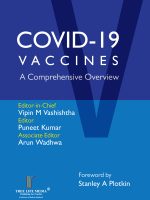
COVID – 19 VACCINES A Comprehensive Overview
₹1,595.00We are amid a pandemic that continues to smoulder almost everywhere with raging fire off and on at different places. It has not only devastated hundreds of thousands of families who lost someone to the virus and affected over 300 million people directly, it has affected all 7.9 billion of us in some way or other. At the same time, humanity has risen well to the pandemic challenges. It was realized very early during the current outbreal that safe and effcacious vaccines would be crucial in tackling the pandemic. The unprecedented global collaboration among all stakeholders: Scientists, pharmaceutical industry, funding agencies and Governments demonstrated what a global will could do: hundreds of vaccine candidates developed, and vaccine deployment started within 12 months of isolation of new virus something that takes over a decade otherwise.
-
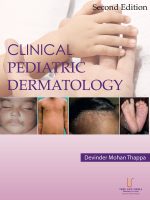
Clinical Pediatric Dermatology
₹1,350.00This book aims at bridging that gap and putting the basic concepts of pediatric dermatology together which help the dermatologists,post graduates and pediatricians understand and manage the pediatric dermatoses in India. With primary focus on beginners in pediatric dermatology and pediatricians,the conciseness and brevity of clinical notes has not been compromised. This book has been written keeping in view the interests of both pediatric dermatologists and pediatricians. In this era of sub-specialization, general pediatricians who offer primary care to children must be knowledgeable in pediatric dermatological problems.
-

Puzzling Cases in Pediatric Dermatology Volume 1
₹995.00The book covers 30 Unique Cases in Pediatric Dermatology written by some of the Leading Experts. The book would be highly useful to all Dermatologists, Pediatricians, Consulting Physicians, Post Graduate Students and those interested in treating Children with Dermatological Conditions
-
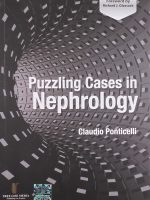
Puzzling Cases in Nephrology
₹2,295.00This Unique book provides a glimpse of how medical mysteries can be solved, or if not solved, atleast better understood. There is much in this book that will not easily be found in modern textbooks, as this to me organizes information around case examples rather than organizing facts around disease entities. In this book cases of renal diseases and kidney transplantation of particular diagnostic or therapeutic interest have been selected. This is an essential read for Nephrologists in practice and training and all those interested in care for a Renal patient
-
Dermatological Diseases A Practical Approach 3/Ed. – Revised & Updated
₹1,595.00Dermatology has grown much since the release of the second edition, with several advances in different fields suchh as lasers, biologics, drug therapy, dermoscopy. But the most notable change has been the change in profile, with emphasis on procedural dermatology and visibility on social media. The new 3 rd Edition reflects these changes and is therefore a thoroughly revised edition. Several new images have been added to make it more illustrative. However, the emphasis on clarity in a reader- friendly manner. Therefore the emphasis on text boxes, schematic diagrams, and flow charts continues. A new addition is the list of suggested reading, MCQs and case reports for each chapter. The Following quote form previous edition is still relevant: Writing of a book is like sawing a saw- it sharpens the mind and freshens the knowledge and is thus a process that gives immense satisfaction and joy. This satisfaction and joy will be greater if the readers too find it a valuable tool to enhance their knowledge.
-
Clinician’s Handbook of Diabetes 3/Ed.
₹675.00Case -based approach is one of the most used and most effective formats to present medical information and is the foundation for developing evidence – based treatment protocols. In its third edition, the Clinician’s Handbook of Diabetes Mellitus covers a wide range of case studies in diabetology with each case including history, investigations, differential diagnosis and discussion, critique, practice points as well as references.
-
Current Progress In Nephrology Volume 3
₹1,995.00In the third volume of Current Progress in Nephrology, recent advances in different areas of kidney disease have been authored by eminent clinicians. The first few chapters discuss the genetics of renal development, regenerative medicine in relation to kidney, molecular diagnostics. Newer diagnostic modalities like functional magnetic resonance imaging, point of care ultrasonography and electron microscopy of organised deposits in kidney diseases are discussed in the subsequent 3 chapters. Diagnosing and managing difficult conditions of chronic kidney disease like, hepatorenal syndrome, pregnancy related renal problems, and scleroderma crisis are discussed in appropriate chapters. Anaemia, usually associated with CKD, is a significant cause of left ventricular hypertrophy and cardiovascular disease. The guidelines for correcting anaemia with iron supplementation and erythropoietin stimulating agents are provided in an appropriate chapter. Autosomal dominant rubulointerstitial kidney disease, a frequent cause of progressive CKD often remains an underdiagnosed condition and has been highlighted in one nice review. Understanding another a rare condition, thrombotic miocroangiopathy is important since it may lead to endstage renal disease or death, if not identified and appropriately treated in time.
-

CARDIAC MRI Simplified CONCISE GUIDE
₹625.00Who Will benefit from this book? * Genuine interest in cardiovascular imaging * International certification exams * Enhancing skills in interpretations of cardiac MR Why this format? * Salient points, easier and faster to read. * Questions-answer approach for better understanding of topic. * Short and well contained guide. What are the highlights of the book? * Comprehensive coverage of all topics * Appropriate illustrations * Inclusion of recent advances
Be the first to review “Handbook of Drugs in Intensive Care 6/Ed.”