
MCQs for FRCOphth Part 2 is key resource for cadidates preparing to sit the Royal College of Ophthalmologists (RCOphth) examination. Written by experts in the field, it is carefully mapped to the RCOphth curriculum, providing comprehensive preparation for all aspects of this challening exam. Written for the new fellowship in Ophthalmology(FRCOphth) format, it contains 360 questions organized into five sections to reflect the subdividions of the exam. A mock examination of 90 questions enables trainees to assess their level of knowledge, and practise the technique and approach needed for the examination. In addition to a small ratio of illustration-based questions to reflect the real FRCOphth exam, it also places an emphasis on areas that are not well covered in other materials, such as General Medical Council (GMC) and RCOphth guidlines. All answers are accompanied by detailed expanations and relevant further reading sources, providing candidates with high-quality self-assessment.
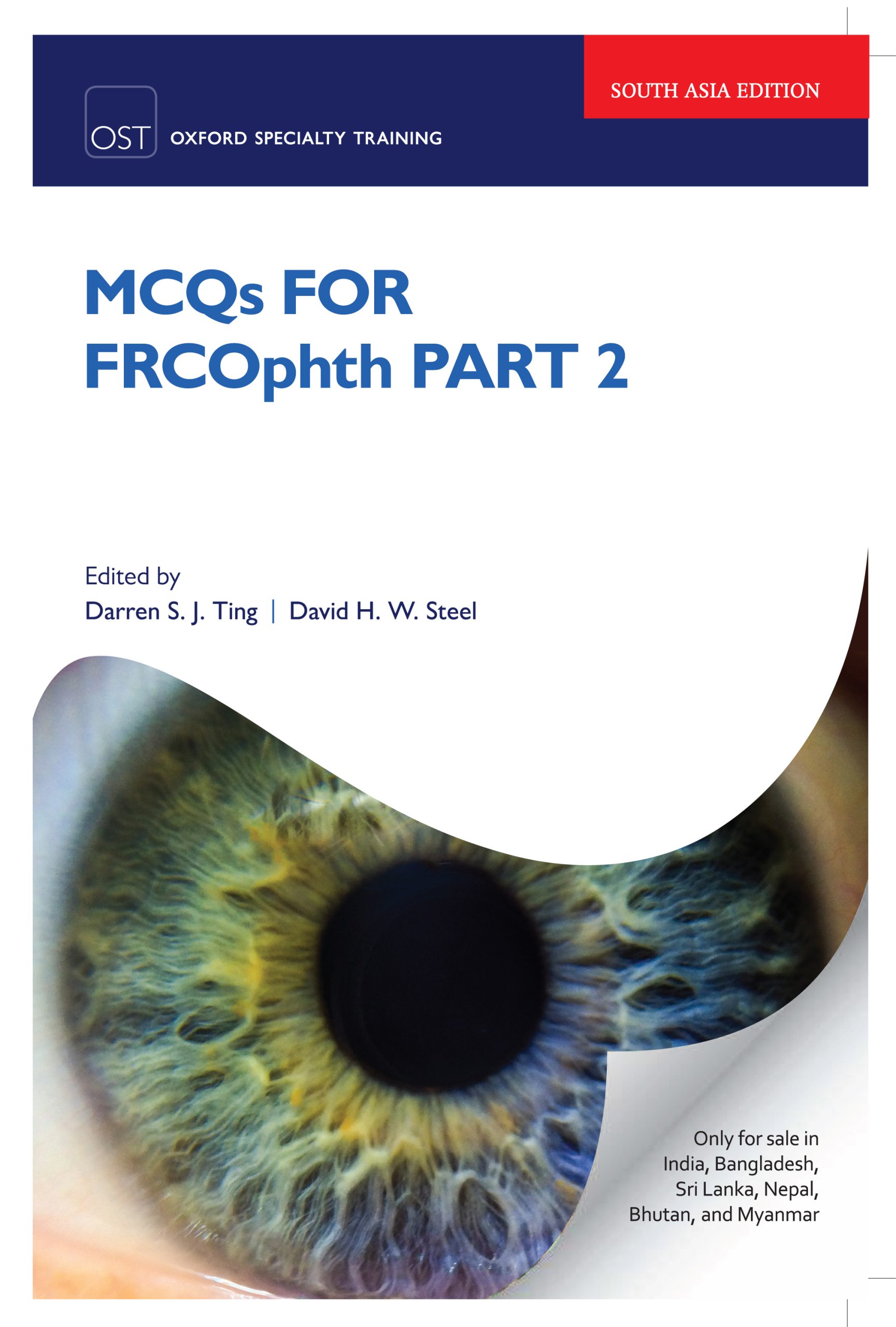
MCQS FOR FRCOPHTH PART 2
₹795.00
| Weight | 450 kg |
|---|---|
| Dimensions | 25.4 × 20.3 × 4.7 cm |
Customer Reviews
There are no reviews yet.
Related products
-
COVID – 19 VACCINES A Comprehensive Overview
₹1,595.00We are amid a pandemic that continues to smoulder almost everywhere with raging fire off and on at different places. It has not only devastated hundreds of thousands of families who lost someone to the virus and affected over 300 million people directly, it has affected all 7.9 billion of us in some way or other. At the same time, humanity has risen well to the pandemic challenges. It was realized very early during the current outbreal that safe and effcacious vaccines would be crucial in tackling the pandemic. The unprecedented global collaboration among all stakeholders: Scientists, pharmaceutical industry, funding agencies and Governments demonstrated what a global will could do: hundreds of vaccine candidates developed, and vaccine deployment started within 12 months of isolation of new virus something that takes over a decade otherwise.
-
Dermatological Diseases A Practical Approach 3/Ed. – Revised & Updated
₹1,595.00Dermatology has grown much since the release of the second edition, with several advances in different fields suchh as lasers, biologics, drug therapy, dermoscopy. But the most notable change has been the change in profile, with emphasis on procedural dermatology and visibility on social media. The new 3 rd Edition reflects these changes and is therefore a thoroughly revised edition. Several new images have been added to make it more illustrative. However, the emphasis on clarity in a reader- friendly manner. Therefore the emphasis on text boxes, schematic diagrams, and flow charts continues. A new addition is the list of suggested reading, MCQs and case reports for each chapter. The Following quote form previous edition is still relevant: Writing of a book is like sawing a saw- it sharpens the mind and freshens the knowledge and is thus a process that gives immense satisfaction and joy. This satisfaction and joy will be greater if the readers too find it a valuable tool to enhance their knowledge.
-
Manual of Clinical Endocrinology 2/Ed.
₹995.00Algorithms provide a logical, concise and cost-effective approach to medical reasoning: utilizing a concise, step-by-step approach based upon clues from the history, physical examination and laboratory studies, algorithms help avoid excessive unnecessary procedures and testing. The 2nd edition of Manual of Clinical Endocrinology deals with practical issues ranging from simple thyroid function testing and thyrotoxicosis to approaching a patient with suspected thyrotoxicosis. Algorithms are simple and effective tools for the practitioner in a hurry and since the majority of the intended audience, physicians, general practitioners and postgraduates have very little time amidst their busy clinical routine, this manual uses algorithms. Twenty-two clinical issues are covered by an algorithmic approach, breaking down long lists and tables of differential diagnosis into smaller, more manageable ones. Common clinical symptoms, signs and laboratory abnormalities are classified as they present themselves at the patient’s bedside. This manual is an attempt to provide the busy practitioner with a desktop reckoner which will be useful while approaching a patient with a suspected endocrine problem. The authors have strived to be practical not pedantic – at the same time have made great effort to ensure that the recommendations are evidence based.
-
Current Progress In Nephrology Volume 3
₹1,995.00In the third volume of Current Progress in Nephrology, recent advances in different areas of kidney disease have been authored by eminent clinicians. The first few chapters discuss the genetics of renal development, regenerative medicine in relation to kidney, molecular diagnostics. Newer diagnostic modalities like functional magnetic resonance imaging, point of care ultrasonography and electron microscopy of organised deposits in kidney diseases are discussed in the subsequent 3 chapters. Diagnosing and managing difficult conditions of chronic kidney disease like, hepatorenal syndrome, pregnancy related renal problems, and scleroderma crisis are discussed in appropriate chapters. Anaemia, usually associated with CKD, is a significant cause of left ventricular hypertrophy and cardiovascular disease. The guidelines for correcting anaemia with iron supplementation and erythropoietin stimulating agents are provided in an appropriate chapter. Autosomal dominant rubulointerstitial kidney disease, a frequent cause of progressive CKD often remains an underdiagnosed condition and has been highlighted in one nice review. Understanding another a rare condition, thrombotic miocroangiopathy is important since it may lead to endstage renal disease or death, if not identified and appropriately treated in time.
-
Puzzling Cases in Pediatric Dermatology Volume 1
₹995.00The book covers 30 Unique Cases in Pediatric Dermatology written by some of the Leading Experts. The book would be highly useful to all Dermatologists, Pediatricians, Consulting Physicians, Post Graduate Students and those interested in treating Children with Dermatological Conditions
-
Current Progress in Nephrology Volume 2
₹1,500.00The aim of the 2nd volume of this book is to address the basic concepts and newer developments in selected areas of clinical nephrology, dialysis and renal transplantation. Selected topics on interest with reference to recent developments, updated classifications or advances in pathogenesis and treatment. Nephrologists from around the world have contributed to this one of its kind book.
-

EEG Simplified
₹1,255.00EEG Simplified is an interesting and informative book, it has been written in simple english and discusses various aspects of electrophysiology with clarity. Beginning with basic recording concepts of EEG and the descriptions of normal EEG, the authors take us through artifacts, a very important chapter and then discuss electroencephalographic abnormalities seen in variety of neurological disorders. This kind of book on clinical neurophysiology is extremely useful for day to day clinical practice.
-
EMG Simplified
₹3,250.00ABOUT THE BOOK – A concise book for practical Electroneuromyography What is it for? Electrodiagnosticians Neurology trainees Neurology practitioners Orthopedic and hand surgeons Physicians Technologists COVERS Technical as well as neurological aspects Troubleshooting paradigms Approach based on presenting symptoms Disease based discussions Considerations about the common and the uncommon Case Studies
Be the first to review “MCQS FOR FRCOPHTH PART 2”