
OSCEs for Intensive Care Medicine is a comprehensive revision resource for doctors preparing to take the fellowship of the faculty of Intensive Care Medicine (FFICM) and the European Diploma in Intensive Care Medicine (EDIC). The objective structured clinical exam (OSCE) component of these exams can present a difficult hurdle, even for doctors with years of clincial experience. As such, effective preparation is key. Written by a team of practicing intensive care consultants with experience of running a successful FFCIM course, this book features over 100 practice questions organized into eight mock OSCE exams and is mapped to both the FFCIM and CoBaTrlCE curricula. Structured to reflect the FFICM OSCE, they are divided into stations on professionalism, data, resuscitation and equipment, each of which are accompanied by further reading to ensure high – quality self – assessment. With hints and tips throughout to help candidates avoid common mistakes and misconceptions, this intuitively structured question book is essential reading for any doctor preparing for the FFCIM or EDIC OSCE exams.
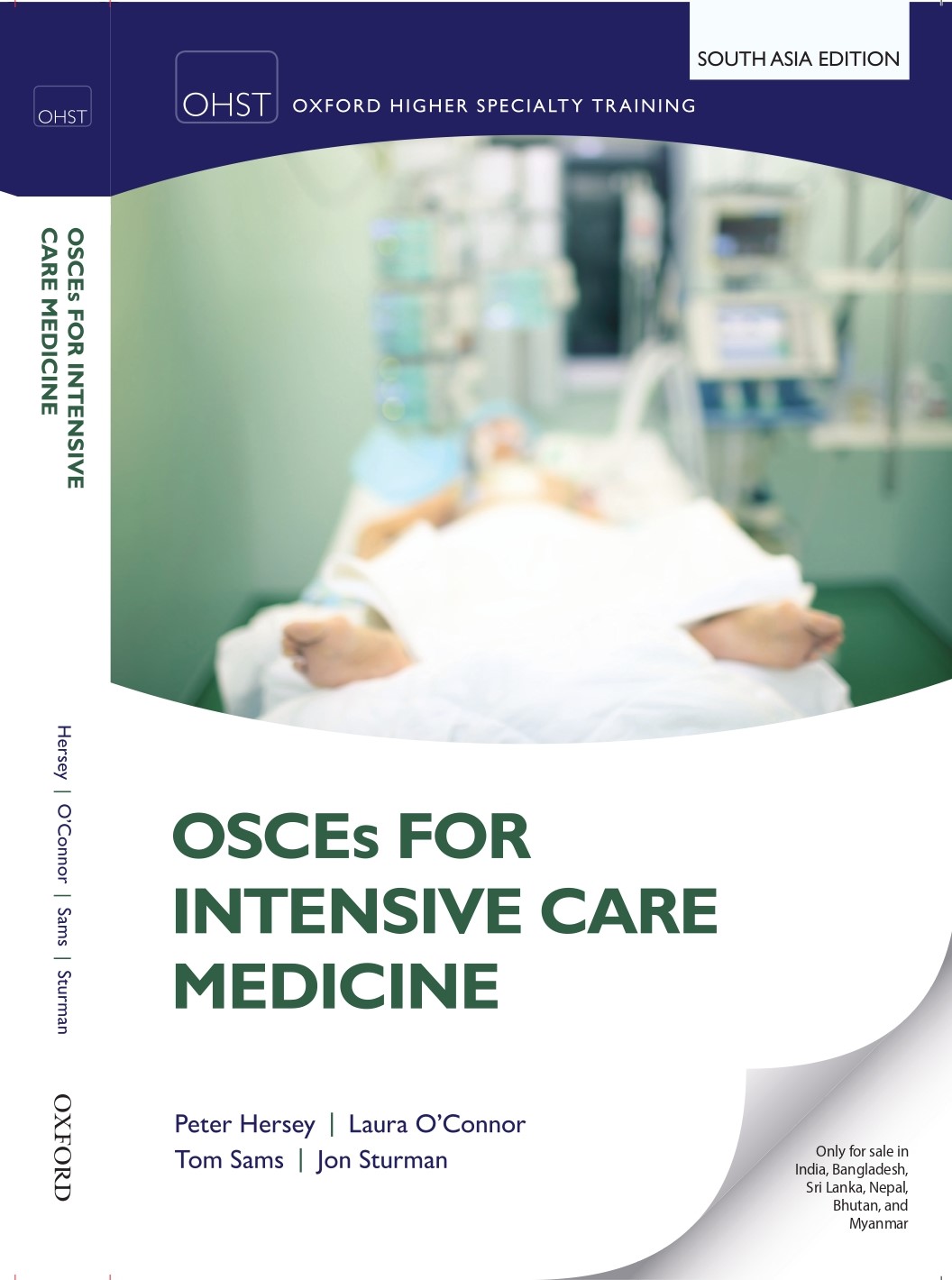
OSCEs FOR INTENSIVE CARE MEDICINE
₹995.00
Customer Reviews
There are no reviews yet.
Related products
-
-
Clinician’s Handbook of Diabetes 3/Ed.
₹675.00Case -based approach is one of the most used and most effective formats to present medical information and is the foundation for developing evidence – based treatment protocols. In its third edition, the Clinician’s Handbook of Diabetes Mellitus covers a wide range of case studies in diabetology with each case including history, investigations, differential diagnosis and discussion, critique, practice points as well as references.
-

EEG Simplified
₹1,255.00EEG Simplified is an interesting and informative book, it has been written in simple english and discusses various aspects of electrophysiology with clarity. Beginning with basic recording concepts of EEG and the descriptions of normal EEG, the authors take us through artifacts, a very important chapter and then discuss electroencephalographic abnormalities seen in variety of neurological disorders. This kind of book on clinical neurophysiology is extremely useful for day to day clinical practice.
-
Current Progress in Orthopedics Volume 2
₹1,500.00This textbook represents the second text from the Editors who have invited a panel of distinguished authors with international reputations to present the current state of the art in orthopedic surgery. There is more awareness of musculoskeletal disease as a cause of disability in every country and as governments and non-governmental organizations move to address this problem there is increasing recognition of the importance of orthopedic surgery in dealing with musculoskeletal disease. The entire spectrum from congenital abnormalities through pediatric musculoskeletal illness, trauma, sports and degenerative diseases have been covered in this volume. This is the companion volume to the first published two years ago and we anticipate further volumes in the future as we attempt to address the ever expanding role of orthopedic surgery in modern healthcare.
-
Puzzling Cases in Nephrology
₹2,295.00This Unique book provides a glimpse of how medical mysteries can be solved, or if not solved, atleast better understood. There is much in this book that will not easily be found in modern textbooks, as this to me organizes information around case examples rather than organizing facts around disease entities. In this book cases of renal diseases and kidney transplantation of particular diagnostic or therapeutic interest have been selected. This is an essential read for Nephrologists in practice and training and all those interested in care for a Renal patient
-
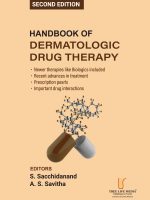
HANDBOOK OF DERMATOLOGIC DRUG THERAPY 2/Ed. Revised & Updated
₹1,495.00Dermatology is a branch of medicine which relies heavily on outpatient treatment and also managing several incapacitating diseases as inpatients. The load of patients in any dermatology OPD is ever increasing, thanks to the recent awareness about the dermatological diseases. The role of a Dermatologist is complicated and quite demanding with reference to innumerable diseases that he has to deal with. Added to this, he is also expected to be well versed with all the drugs that he prescribes, what with constant addition of newer drugs. It is humanly impossible to remember and recollect the various indications, dosages, formulations, side effects and mechanism of actions of all the drugs that he is suppose to use. Another perennial threat is that posed by drug interactions. Books available on this subject are either very exhaustive or less informative. Handbook of Dermatologic Drug Therapy is published is an attempt to bridge this gap. In this second edition, newer therapies like biologics has been added. Each chapter has been updated to add the recent advances. The book is designed and written in a simple language and is not pocket heavy. The target readers are undergraduate, postgraduate and the practicing dermatologists alike. The contents of the book follow a standard format like chemical structure, mechanism of action, pharmacokinetics, indications, contraindications, side effects. Two other highlights of this book are prescription pearls and important drug interactions.
-
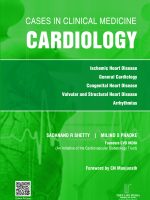
CASES IN CLINICAL MEDICINE CARDIOLOGY
₹1,495.00This book is a case – based approach to some of the connon clinical problems and case scenarios in cardiology encountered by clinicians on a day-to-day basis. It is a multi-author work, with contributions from some of the most reowned clinicians ans academicians in the field of Cardiology. Each chapter begins with a case scenario, and goes on to discuss the diagnostic approach, Mamagement, and key learnings for the clinicians faced with a similar case. The most contemporary evidence is reviewed, and practical algorithms suggested wherever appropriate. We have endeavored to provide a balanced coverage of the vast fields of Cardiology, with topics including ischemic heart disease, general Cardiology, congenital, valvular and structural heart disease and arrhythmias. The selected cases cover exciting new interventional techniques like TAVR, precutaneous pulmonary valve replacement, and LA appendage closure replacement., as well as recent development in coronary physiology, robotics in intervention, imaging modalities like IVUS and OCT, cardiac MRI and advanced echocardiographic techniques like strain rate imaging. A separate section on Arrhythmias deals with some common, yet therapeutically challenging, rhythm disorders seen in clinical practice.
Be the first to review “OSCEs FOR INTENSIVE CARE MEDICINE”