
| Dimensions | 20 × 14 × 4 cm |
|---|
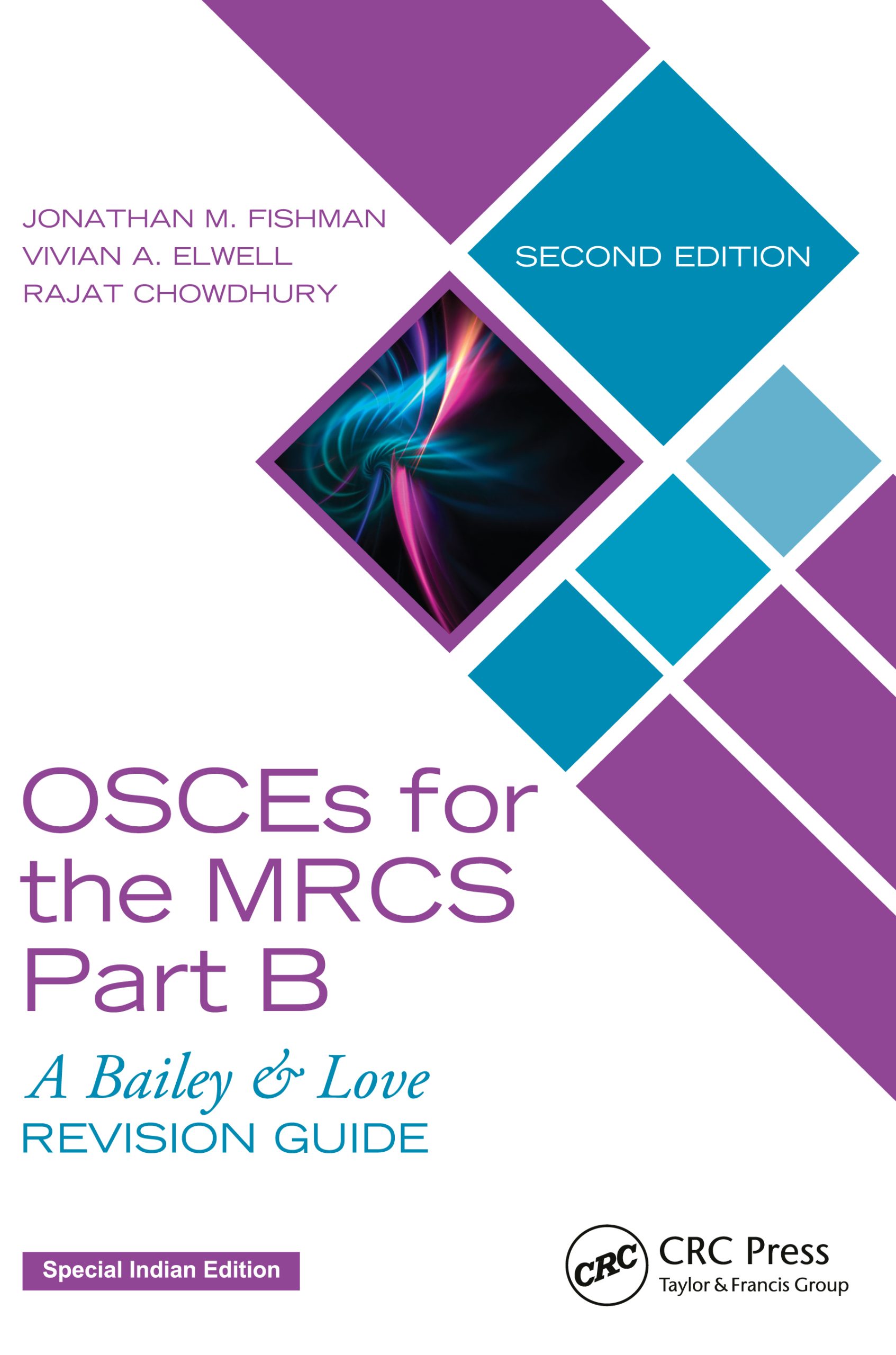
OSCEs for the MRCS Part B – A Bailey & Love Revision Guide
₹795.00
Customer Reviews
There are no reviews yet.
Related products
-

Puzzling Cases in Nephrology
₹2,295.00This Unique book provides a glimpse of how medical mysteries can be solved, or if not solved, atleast better understood. There is much in this book that will not easily be found in modern textbooks, as this to me organizes information around case examples rather than organizing facts around disease entities. In this book cases of renal diseases and kidney transplantation of particular diagnostic or therapeutic interest have been selected. This is an essential read for Nephrologists in practice and training and all those interested in care for a Renal patient
-

John Studd’s Current Progress in Obstetrics and Gynaecology Volume 7
₹1,225.00In Contemporary Obstetrics and Gynaecology, what new trends have evolved, what new advancements have been made, what new technologies have been developed, what new challenges do we face? Current Progress in Obstetrics and Gynaecology will continually answer those questions for you. Volume 7 comprises several topics at the cutting edge of contemporary Obstetrics and Gynecology. First, this volume starts with applications of artificial intelligence (AI) in reproduction medicine and how AI may lead to paradigm shift in this field. Another paradigm – changing topic involves population genetic screening for individualized preventative medicine. This volume addresses a spectrum of gynecologic topics, from dyslipidemia in pregnancy, obesity and reproduction, modern concepts of managing climacteric and menopause, treatment options for overactive bladder and the use of mesh treatment for urogynaecology. There are also chapters dealing with prevention and management of gynaecologic cancers such as those of the cervix and the endometrium. This volume updates new advancement and pratice in obstetric and gynaecological techniques, such as cervical cerlage in modern obsteric practice, routine third trimester scan for the detection of foetal anomalies and now to reduce complications in laparoscopic surgery. Last but not least, this volume addresses third gender gynaecology, the obstetric and gynaecologic care for transgender patients and the increasing use of cosmatic gynaecology in recent years. The editors are grateful to all the authors who have given their expertise and enabled this volume to improve the care of obstetric and gynaecologic patients throughout the world.
-
-
Puzzling Cases in Stroke
₹1,250.00Stroke is the leading cause of permeant disability , including post stroke dementia, pain, depression and personality changes. While large Clinical Trials reflect information about large stroke populations, the presentation of each and every stroke patient is individual and special. Currently there are only few books which illustrate case oriented discussion. This is unique book which includes common and unusual case of stroke, so as to reinforce diagnostic skills through careful analysis of individual presenting patterns, and to guide treatment decisions.
-
COVID – 19 VACCINES A Comprehensive Overview
₹1,595.00We are amid a pandemic that continues to smoulder almost everywhere with raging fire off and on at different places. It has not only devastated hundreds of thousands of families who lost someone to the virus and affected over 300 million people directly, it has affected all 7.9 billion of us in some way or other. At the same time, humanity has risen well to the pandemic challenges. It was realized very early during the current outbreal that safe and effcacious vaccines would be crucial in tackling the pandemic. The unprecedented global collaboration among all stakeholders: Scientists, pharmaceutical industry, funding agencies and Governments demonstrated what a global will could do: hundreds of vaccine candidates developed, and vaccine deployment started within 12 months of isolation of new virus something that takes over a decade otherwise.
-

CARDIAC MRI Simplified CONCISE GUIDE
₹625.00Who Will benefit from this book? * Genuine interest in cardiovascular imaging * International certification exams * Enhancing skills in interpretations of cardiac MR Why this format? * Salient points, easier and faster to read. * Questions-answer approach for better understanding of topic. * Short and well contained guide. What are the highlights of the book? * Comprehensive coverage of all topics * Appropriate illustrations * Inclusion of recent advances
-
Current Progress In Nephrology Volume 1
₹1,500.00The aim of the book is to address the basic concepts and newer developments in selected areas of clinical nephrology, dialysis and renal transplantation. Selected topics on interest with reference to recent developments, updated classifications or advances in pathogenesis and treatment. Nephrologists from around the world have contributed to this one of its kind book.


Be the first to review “OSCEs for the MRCS Part B – A Bailey & Love Revision Guide”