
About the book: Viral hepatitis and its complications result in approximately 1 to 4 million deaths per year worldwide. Viral hepatitis is a significant healthcare problem worldwide caused by hepatotropic viruses with different routes of transmission and varying courses of disease. Most of the hepatotropic viruses are acute and self-limiting, although hepatitis B, C, and rarely E have the potential to become chronic. Chronic hepatitis may be associated with severe complications such as cirrhosis, and hepatocellular carcinoma. The vast majority of deaths are caused by Hepatitis B and C. Hepatitis E is an additional cause of mortality in developing countries like India, especially in pregnant women and in those with preexisting chronic liver disease. In the second volume of this short easy reckoner handy book on viral hepatitis for physicians, students, gastroenterologists and hepatologists, the discussion is presented in the most frequently asked clinical questions and the focus is primarily on clinical diagnosis and management of various forms of viral hepatitis. This book has been compiled by contributions from acclaimed hepatologists of the country, who have extensive knowledge, experience and understanding of the disease. The authors have tried to provide their practical suggestions on the controversial topics and define the unsettled questions for the readers.
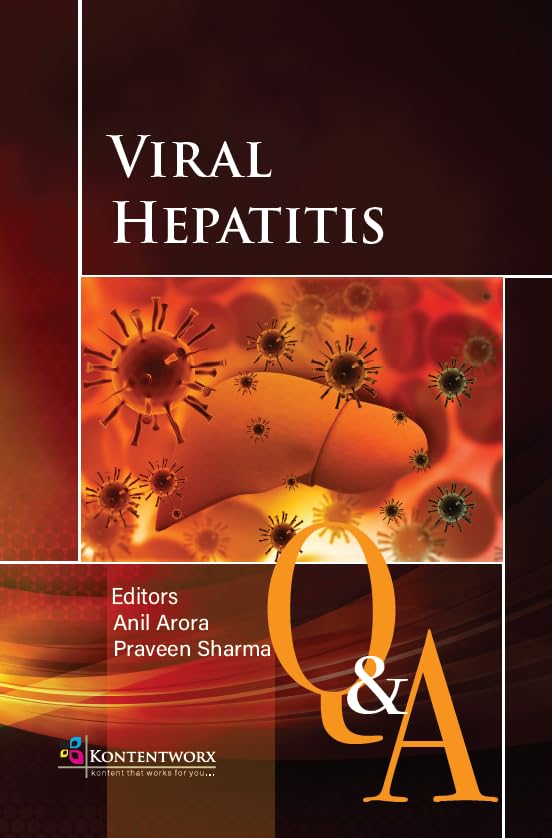
Viral Hepatitis
₹1,250.00
| Weight | 500 kg |
|---|
Customer Reviews
There are no reviews yet.
Related products
-
CASES IN CLINICAL MEDICINE CARDIOLOGY
₹1,495.00This book is a case – based approach to some of the connon clinical problems and case scenarios in cardiology encountered by clinicians on a day-to-day basis. It is a multi-author work, with contributions from some of the most reowned clinicians ans academicians in the field of Cardiology. Each chapter begins with a case scenario, and goes on to discuss the diagnostic approach, Mamagement, and key learnings for the clinicians faced with a similar case. The most contemporary evidence is reviewed, and practical algorithms suggested wherever appropriate. We have endeavored to provide a balanced coverage of the vast fields of Cardiology, with topics including ischemic heart disease, general Cardiology, congenital, valvular and structural heart disease and arrhythmias. The selected cases cover exciting new interventional techniques like TAVR, precutaneous pulmonary valve replacement, and LA appendage closure replacement., as well as recent development in coronary physiology, robotics in intervention, imaging modalities like IVUS and OCT, cardiac MRI and advanced echocardiographic techniques like strain rate imaging. A separate section on Arrhythmias deals with some common, yet therapeutically challenging, rhythm disorders seen in clinical practice.
-

EEG Simplified
₹1,255.00EEG Simplified is an interesting and informative book, it has been written in simple english and discusses various aspects of electrophysiology with clarity. Beginning with basic recording concepts of EEG and the descriptions of normal EEG, the authors take us through artifacts, a very important chapter and then discuss electroencephalographic abnormalities seen in variety of neurological disorders. This kind of book on clinical neurophysiology is extremely useful for day to day clinical practice.
-
Puzzling Cases in Stroke
₹1,250.00Stroke is the leading cause of permeant disability , including post stroke dementia, pain, depression and personality changes. While large Clinical Trials reflect information about large stroke populations, the presentation of each and every stroke patient is individual and special. Currently there are only few books which illustrate case oriented discussion. This is unique book which includes common and unusual case of stroke, so as to reinforce diagnostic skills through careful analysis of individual presenting patterns, and to guide treatment decisions.
-
Puzzling Cases in Pediatric Dermatology Volume 1
₹995.00The book covers 30 Unique Cases in Pediatric Dermatology written by some of the Leading Experts. The book would be highly useful to all Dermatologists, Pediatricians, Consulting Physicians, Post Graduate Students and those interested in treating Children with Dermatological Conditions
-

Manual of Clinical Endocrinology 2/Ed.
₹995.00Algorithms provide a logical, concise and cost-effective approach to medical reasoning: utilizing a concise, step-by-step approach based upon clues from the history, physical examination and laboratory studies, algorithms help avoid excessive unnecessary procedures and testing. The 2nd edition of Manual of Clinical Endocrinology deals with practical issues ranging from simple thyroid function testing and thyrotoxicosis to approaching a patient with suspected thyrotoxicosis. Algorithms are simple and effective tools for the practitioner in a hurry and since the majority of the intended audience, physicians, general practitioners and postgraduates have very little time amidst their busy clinical routine, this manual uses algorithms. Twenty-two clinical issues are covered by an algorithmic approach, breaking down long lists and tables of differential diagnosis into smaller, more manageable ones. Common clinical symptoms, signs and laboratory abnormalities are classified as they present themselves at the patient’s bedside. This manual is an attempt to provide the busy practitioner with a desktop reckoner which will be useful while approaching a patient with a suspected endocrine problem. The authors have strived to be practical not pedantic – at the same time have made great effort to ensure that the recommendations are evidence based.
-

HANDBOOK OF DERMATOLOGIC DRUG THERAPY 2/Ed. Revised & Updated
₹1,495.00Dermatology is a branch of medicine which relies heavily on outpatient treatment and also managing several incapacitating diseases as inpatients. The load of patients in any dermatology OPD is ever increasing, thanks to the recent awareness about the dermatological diseases. The role of a Dermatologist is complicated and quite demanding with reference to innumerable diseases that he has to deal with. Added to this, he is also expected to be well versed with all the drugs that he prescribes, what with constant addition of newer drugs. It is humanly impossible to remember and recollect the various indications, dosages, formulations, side effects and mechanism of actions of all the drugs that he is suppose to use. Another perennial threat is that posed by drug interactions. Books available on this subject are either very exhaustive or less informative. Handbook of Dermatologic Drug Therapy is published is an attempt to bridge this gap. In this second edition, newer therapies like biologics has been added. Each chapter has been updated to add the recent advances. The book is designed and written in a simple language and is not pocket heavy. The target readers are undergraduate, postgraduate and the practicing dermatologists alike. The contents of the book follow a standard format like chemical structure, mechanism of action, pharmacokinetics, indications, contraindications, side effects. Two other highlights of this book are prescription pearls and important drug interactions.
-
-
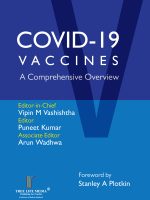
COVID – 19 VACCINES A Comprehensive Overview
₹1,595.00We are amid a pandemic that continues to smoulder almost everywhere with raging fire off and on at different places. It has not only devastated hundreds of thousands of families who lost someone to the virus and affected over 300 million people directly, it has affected all 7.9 billion of us in some way or other. At the same time, humanity has risen well to the pandemic challenges. It was realized very early during the current outbreal that safe and effcacious vaccines would be crucial in tackling the pandemic. The unprecedented global collaboration among all stakeholders: Scientists, pharmaceutical industry, funding agencies and Governments demonstrated what a global will could do: hundreds of vaccine candidates developed, and vaccine deployment started within 12 months of isolation of new virus something that takes over a decade otherwise.

Be the first to review “Viral Hepatitis”