
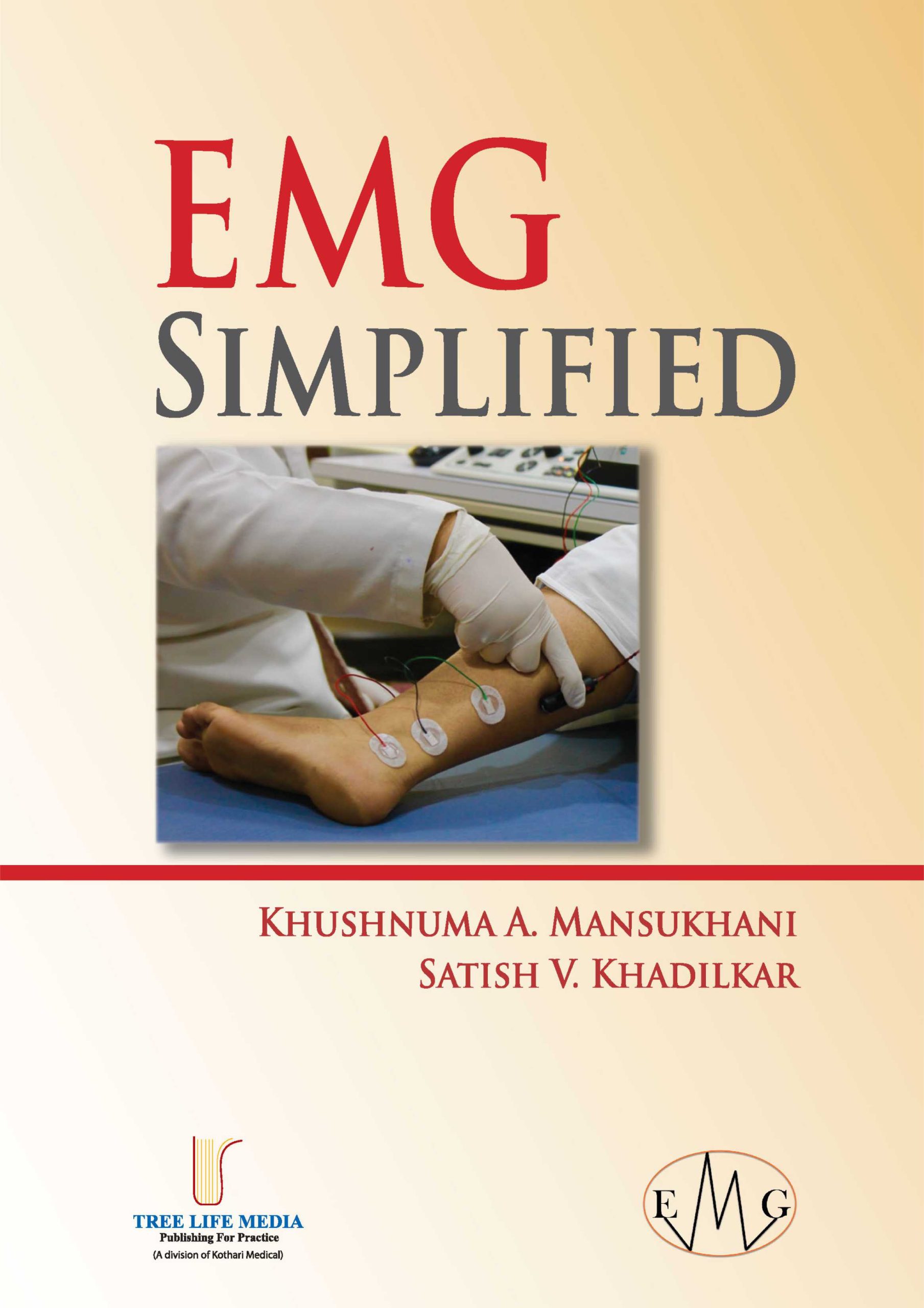
ABOUT THE BOOK – A concise book for practical Electroneuromyography What is it for? Electrodiagnosticians Neurology trainees Neurology practitioners Orthopedic and hand surgeons Physicians Technologists COVERS Technical as well as neurological aspects Troubleshooting paradigms Approach based on presenting symptoms Disease based discussions Considerations about the common and the uncommon Case Studies
EMG Simplified
₹3,250.00
ABOUT THE BOOK – A concise book for practical Electroneuromyography What is it for? Electrodiagnosticians Neurology trainees Neurology practitioners Orthopedic and hand surgeons Physicians Technologists COVERS Technical as well as neurological aspects Troubleshooting paradigms Approach based on presenting symptoms Disease based discussions Considerations about the common and the uncommon Case Studies
| Weight | 1500 kg |
|---|---|
| Dimensions | 18.3 × 4.6 × 26 cm |
Customer Reviews
There are no reviews yet.
Related products
-

Current Progress in Obstetrics and Gynecology – Volume 5
₹1,225.00In its 5th Volume the now CLASSIC comes with a value addition in the form of Multiple Choice Questions, which would highly beneficial to one and all. The Editors have gathered an ensemble of acclaimed clinicians giving an insight to various key aspect in Obstetrics and Gynaecology.
-

Clinical Pediatric Dermatology
₹1,350.00This book aims at bridging that gap and putting the basic concepts of pediatric dermatology together which help the dermatologists,post graduates and pediatricians understand and manage the pediatric dermatoses in India. With primary focus on beginners in pediatric dermatology and pediatricians,the conciseness and brevity of clinical notes has not been compromised. This book has been written keeping in view the interests of both pediatric dermatologists and pediatricians. In this era of sub-specialization, general pediatricians who offer primary care to children must be knowledgeable in pediatric dermatological problems.
-
Current Progress in Orthopedics Volume 2
₹1,500.00This textbook represents the second text from the Editors who have invited a panel of distinguished authors with international reputations to present the current state of the art in orthopedic surgery. There is more awareness of musculoskeletal disease as a cause of disability in every country and as governments and non-governmental organizations move to address this problem there is increasing recognition of the importance of orthopedic surgery in dealing with musculoskeletal disease. The entire spectrum from congenital abnormalities through pediatric musculoskeletal illness, trauma, sports and degenerative diseases have been covered in this volume. This is the companion volume to the first published two years ago and we anticipate further volumes in the future as we attempt to address the ever expanding role of orthopedic surgery in modern healthcare.
-
Puzzling Cases in Stroke Vol. 2
₹1,695.00Stroke is a treatable medical emergency affecting about 15 million people every year worldwide. It is the most common cause of common cause of disability globally and is the third most common cause of death. In the present times, there are effective treatment options which if given timely will benefit the patients of stroke remarkably. Therefore, correct diagnosis of acute stroke is extremely important for the clinicians to provide appropriate treatments and to ensure prevention of acute complications, including recurrent strokes. But sometimes a typical or uncommon presentation of stroke or “stroke chameleons”can lead to diagnostic dilemma. Therefore, timely diagnosis and management may be delayed. There are time – tested strategies which when strictly followed by the Neurphysician can reduce the chances of missing the correct diagnosis. Firstly, “Listen very carefully to the patient. He is telling you the diagnosis.” Clinicians should suspect stroke when the history suggests abrupt onset of neurological symptoms. Remember, Stroke is a clinical diagnosis and imaging is providing the corroboratory evidence. Secondly, a complete and systematic neurological examination should be routinely done in patients presenting with acute neurological symptoms because this might shed light on the true nature of the problem. Finally, even the most sophisticated neuroimaging tests might miss the stroke in the early hours after the event.
-
Puzzling Cases in Electrocardiography
₹775.0012 Lead Electrocardiography remains as clinically relevant now as when first introduced to clinical medicine decades ago. The value of 12 Lead ECG is mattering the ability to integrate the ECG findings into information provided by the history and Physical Examination. The book authored by Prof Rimmerman, one of the foremost Cardiologists in the world follows 50 ECG Case Studies purposefully chosen where the ECG made a clinical impact on the management of the patient
-

Textbook and Atlas of Dermatology 2nd Ed.
₹3,995.00Salient Features :
1) Comprehensive visual guidance you need to effectively evaluate, diagnose and manage all forms of skin disease. over 200 images richly depict etiology, clinical features, diagnosis and treatment, equipping you to provide the best care to every patient. 2) More than 40 chapters covering all dermatological ailments. 3) More than 200 illustrations from the Author’s personal database giving a unique overview of the diseases. 4) Hands – on clinical experience sharing in the form of cases, clinical presentations and management approach.
-
Current Progress In Nephrology Volume 3
₹1,995.00In the third volume of Current Progress in Nephrology, recent advances in different areas of kidney disease have been authored by eminent clinicians. The first few chapters discuss the genetics of renal development, regenerative medicine in relation to kidney, molecular diagnostics. Newer diagnostic modalities like functional magnetic resonance imaging, point of care ultrasonography and electron microscopy of organised deposits in kidney diseases are discussed in the subsequent 3 chapters. Diagnosing and managing difficult conditions of chronic kidney disease like, hepatorenal syndrome, pregnancy related renal problems, and scleroderma crisis are discussed in appropriate chapters. Anaemia, usually associated with CKD, is a significant cause of left ventricular hypertrophy and cardiovascular disease. The guidelines for correcting anaemia with iron supplementation and erythropoietin stimulating agents are provided in an appropriate chapter. Autosomal dominant rubulointerstitial kidney disease, a frequent cause of progressive CKD often remains an underdiagnosed condition and has been highlighted in one nice review. Understanding another a rare condition, thrombotic miocroangiopathy is important since it may lead to endstage renal disease or death, if not identified and appropriately treated in time.
-
Current Progress in Orthopedics Volume 1
₹1,500.00The book disseminates orthopedic knowledge and shares the experience and skill of the best orthopedic surgeons from around the world. The aim of the book with almost 60 contributing authors which covers the subjects from Pediatric Orthopedics to Arthroplasty for the Aging Population and from Cartilage Repair to Open Fracture and Spine Surgery.
Be the first to review “EMG Simplified”