
Women’s hair loss has grown to be a serious issue. Female pattern hair loss (FPHL) is the most common cause of hair loss in women. It cannot be considered just a counterpart of male androgenic alopecia (AGA) as both have distinct etiologies and pathogenesis. Although androgens are known to have a role in male AGA, it is unknown how androgens relate to FPHL. From menarche through pregnancy, nursing, and menopause, a woman experiences a range of hormonal changes that affect every part of her body, including her hair. Due to these variations, women are more vulnerable to environmental factors that function as epigenetic agents and contribute to the pathophysiology of FPHL. Dietary inadequacies such as iron deficiency are also much more common in women as compared to men. Women who lose hair may be more psychologically distressed. Early occurrences of FPHL are difficult to diagnose and are frequently mistaken for telogen effluvium, which delays the initiation of effective treatment. More than 50% of the patient’s hair has already been lost by the time they exhibit thinning consistent with Ludwig grade 1, which hinders the therapeutic response. Therefore, treating women with FPHL calls for an entirely different strategy. There has been a sharp increase in cases of hair loss since the COVID outbreak. Prominent female dermatologists from both national and international backgrounds have contributed to this book. This book comes from authors who were the first to establish a hair clinic in a tertiary care hospital in India three decades ago. A patient load of around 300-400 per month inspired us to do research, innovations and allowed us to gain in depth insight in trichology which has culminated into this book. All things considered, this book is a comprehensive guide for effectively managing women with FPHL.
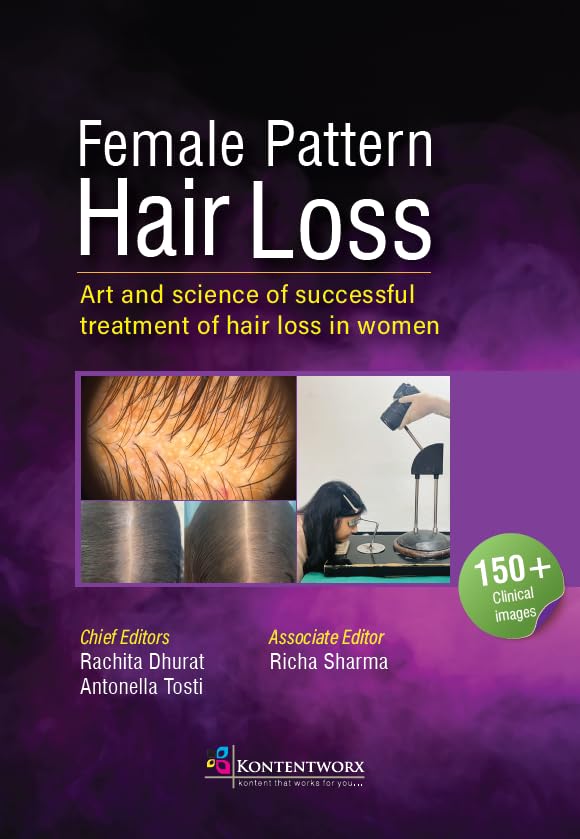
Female Pattern Hair Loss
₹1,800.00
| Weight | 410 kg |
|---|
Customer Reviews
There are no reviews yet.
Related products
-

Textbook and Atlas of Dermatology 2nd Ed.
₹3,995.00Salient Features :
1) Comprehensive visual guidance you need to effectively evaluate, diagnose and manage all forms of skin disease. over 200 images richly depict etiology, clinical features, diagnosis and treatment, equipping you to provide the best care to every patient. 2) More than 40 chapters covering all dermatological ailments. 3) More than 200 illustrations from the Author’s personal database giving a unique overview of the diseases. 4) Hands – on clinical experience sharing in the form of cases, clinical presentations and management approach.
-
Current Progress In Nephrology Volume 1
₹1,500.00The aim of the book is to address the basic concepts and newer developments in selected areas of clinical nephrology, dialysis and renal transplantation. Selected topics on interest with reference to recent developments, updated classifications or advances in pathogenesis and treatment. Nephrologists from around the world have contributed to this one of its kind book.
-
Clinician’s Handbook of Diabetes 3/Ed.
₹675.00Case -based approach is one of the most used and most effective formats to present medical information and is the foundation for developing evidence – based treatment protocols. In its third edition, the Clinician’s Handbook of Diabetes Mellitus covers a wide range of case studies in diabetology with each case including history, investigations, differential diagnosis and discussion, critique, practice points as well as references.
-
-
Manual of Clinical Endocrinology 2/Ed.
₹995.00Algorithms provide a logical, concise and cost-effective approach to medical reasoning: utilizing a concise, step-by-step approach based upon clues from the history, physical examination and laboratory studies, algorithms help avoid excessive unnecessary procedures and testing. The 2nd edition of Manual of Clinical Endocrinology deals with practical issues ranging from simple thyroid function testing and thyrotoxicosis to approaching a patient with suspected thyrotoxicosis. Algorithms are simple and effective tools for the practitioner in a hurry and since the majority of the intended audience, physicians, general practitioners and postgraduates have very little time amidst their busy clinical routine, this manual uses algorithms. Twenty-two clinical issues are covered by an algorithmic approach, breaking down long lists and tables of differential diagnosis into smaller, more manageable ones. Common clinical symptoms, signs and laboratory abnormalities are classified as they present themselves at the patient’s bedside. This manual is an attempt to provide the busy practitioner with a desktop reckoner which will be useful while approaching a patient with a suspected endocrine problem. The authors have strived to be practical not pedantic – at the same time have made great effort to ensure that the recommendations are evidence based.
-
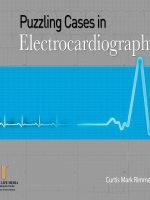
Puzzling Cases in Electrocardiography
₹775.0012 Lead Electrocardiography remains as clinically relevant now as when first introduced to clinical medicine decades ago. The value of 12 Lead ECG is mattering the ability to integrate the ECG findings into information provided by the history and Physical Examination. The book authored by Prof Rimmerman, one of the foremost Cardiologists in the world follows 50 ECG Case Studies purposefully chosen where the ECG made a clinical impact on the management of the patient
-

Grand Rounds in Nephrology
₹2,295.00Thirty-six different case scenarios including clinical nephrology, dialysis and kidney transplantation have been discussed in this volume. Each case scenario is followed by a focussed discussion on a selected aspect in a question answer format. For this issue, eminent nephrologists from all over India have contributed and shared their vast knowledge and experience. This book will be useful to the residents in Nephrology who are preparing to take the examination as well as clinical nephrologists to revise and update their knowledge and skills. Training and ability to present the available data clearly and answering questions with reasonable self-assurance is important when taking a clinical examination or viva-voce. The cases selected are broad based, covering kidney diseases in children, glomerular diseases, non-glomerular kidney diseases, genetic disorders, acute kidney injury, chronic kidney disease, electrolyte abnormalities, dialysis and transplant related clinical scenarios.

Be the first to review “Female Pattern Hair Loss”