
This is the first revision guide to map directly to the new structure of the FRCR Final Part S examination (CR2A). Spanning a broad range of topics, the book follows the core clinical radiology curriculum, covering all modalities. It is divided into 7 test papers, consisting of I20 mixed SBA – type questions with detailed answers in sequential order. Every answer is followed by a short explanation and relevant discussion around the topic with appropriate references. Each paper should take three hours to complete. Delivering over 20 hours of focused exam practice, this guide is a sound investment for trainee radiologists preparing for their Final Part A exam.
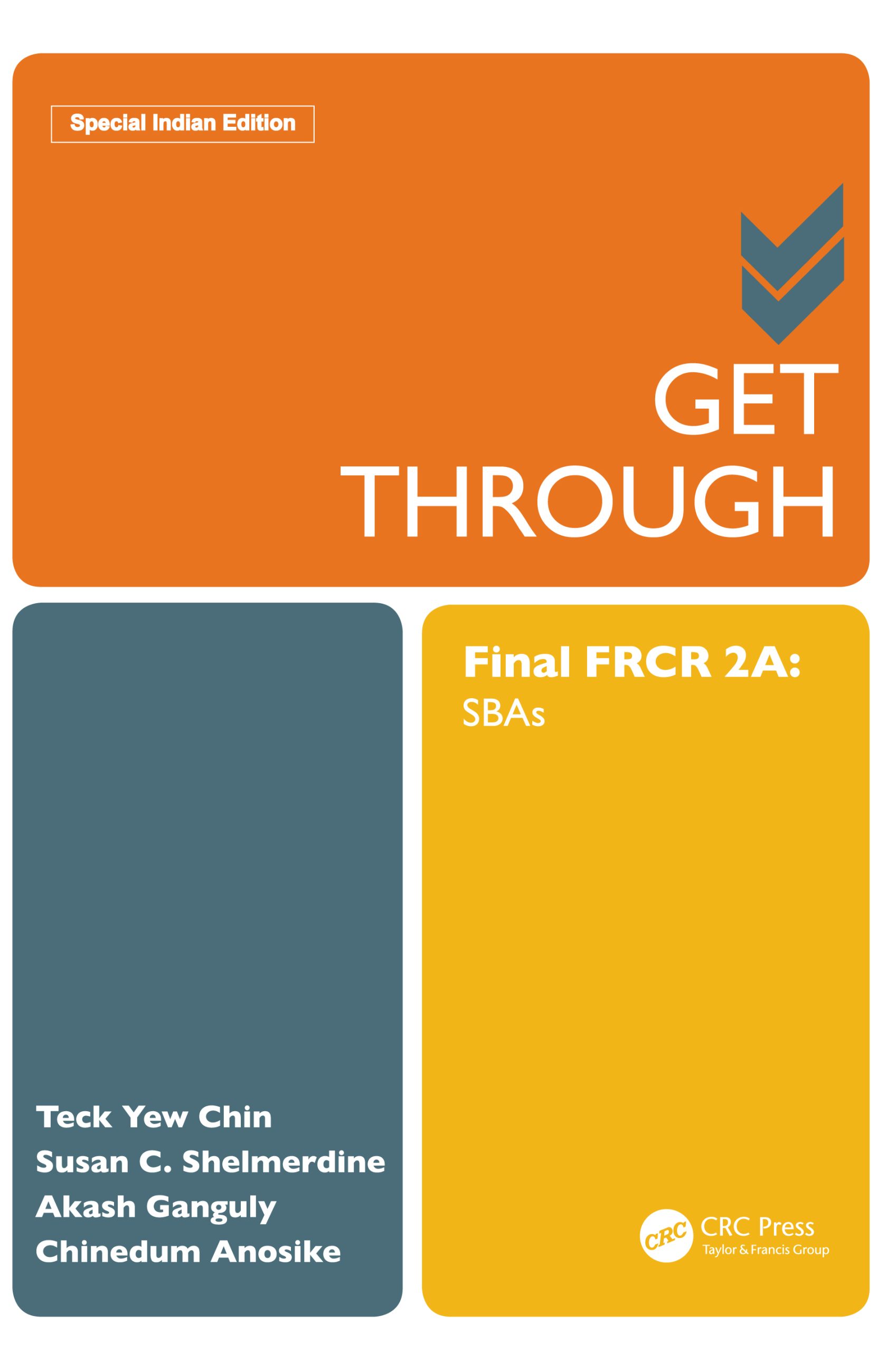
Get Through Final FRCR 2A: SBAs 1st/2017 (Reprint 2020)
₹1,195.00
| Dimensions | 20 × 14 × 4 cm |
|---|
Customer Reviews
There are no reviews yet.
Related products
-
Puzzling Cases in Electrocardiography
₹775.0012 Lead Electrocardiography remains as clinically relevant now as when first introduced to clinical medicine decades ago. The value of 12 Lead ECG is mattering the ability to integrate the ECG findings into information provided by the history and Physical Examination. The book authored by Prof Rimmerman, one of the foremost Cardiologists in the world follows 50 ECG Case Studies purposefully chosen where the ECG made a clinical impact on the management of the patient
-

Puzzling Cases in Nephrology
₹2,295.00This Unique book provides a glimpse of how medical mysteries can be solved, or if not solved, atleast better understood. There is much in this book that will not easily be found in modern textbooks, as this to me organizes information around case examples rather than organizing facts around disease entities. In this book cases of renal diseases and kidney transplantation of particular diagnostic or therapeutic interest have been selected. This is an essential read for Nephrologists in practice and training and all those interested in care for a Renal patient
-

John Studd’s Current Progress in Obstetrics and Gynaecology Volume 7
₹1,225.00In Contemporary Obstetrics and Gynaecology, what new trends have evolved, what new advancements have been made, what new technologies have been developed, what new challenges do we face? Current Progress in Obstetrics and Gynaecology will continually answer those questions for you. Volume 7 comprises several topics at the cutting edge of contemporary Obstetrics and Gynecology. First, this volume starts with applications of artificial intelligence (AI) in reproduction medicine and how AI may lead to paradigm shift in this field. Another paradigm – changing topic involves population genetic screening for individualized preventative medicine. This volume addresses a spectrum of gynecologic topics, from dyslipidemia in pregnancy, obesity and reproduction, modern concepts of managing climacteric and menopause, treatment options for overactive bladder and the use of mesh treatment for urogynaecology. There are also chapters dealing with prevention and management of gynaecologic cancers such as those of the cervix and the endometrium. This volume updates new advancement and pratice in obstetric and gynaecological techniques, such as cervical cerlage in modern obsteric practice, routine third trimester scan for the detection of foetal anomalies and now to reduce complications in laparoscopic surgery. Last but not least, this volume addresses third gender gynaecology, the obstetric and gynaecologic care for transgender patients and the increasing use of cosmatic gynaecology in recent years. The editors are grateful to all the authors who have given their expertise and enabled this volume to improve the care of obstetric and gynaecologic patients throughout the world.
-

Current Progress In Obstetrics & Gynaceology – Volume 6
₹1,225.00Volume 6 of Current Progress in Obstetrics and Gynaecology has been complied during the most challenging time of the Covid – 19 pandemic. In spite of the challenges that all of us have faced thrughout the world, the editors are delighted to produce a state-of-the-art volume on many of the important challenges in contemporary obstetrics and gyaecology. The first part of this volume addresses a spectrum of gynaecologic topics, including infertility, the special challenges of female athletes, early ovarian aging, diagnosis and management of adnexal masses, endoscopic surgery, minimising blood loss in surgery and diagnosing and managing gynaecologic complications. The second part of this volume deals with myriad of obstetric topics, including epigenetics, the hormonal transition int motherhood, maternal infections leading to congenital defects, the important of multidisciplinary care in managing foetal anomalies, the evolving antenatal management of congenital diaphragmatic hernia, the current approach to antepartum haemorrhage and the important role of ultrasound in the management of labour and delivery. The volume closes with the relevance of professional ethics to the clinical practice of obstetrics and gynaecology. The editors are grateful to all of the authors who have given their expertise selflessly at this difficult time and enabled this volume to improve the care of obstetric and gynaecologic patients throughout the world.
-

Puzzling Cases in Pediatric Dermatology Volume 1
₹995.00The book covers 30 Unique Cases in Pediatric Dermatology written by some of the Leading Experts. The book would be highly useful to all Dermatologists, Pediatricians, Consulting Physicians, Post Graduate Students and those interested in treating Children with Dermatological Conditions
-
Puzzling Cases in Stroke
₹1,250.00Stroke is the leading cause of permeant disability , including post stroke dementia, pain, depression and personality changes. While large Clinical Trials reflect information about large stroke populations, the presentation of each and every stroke patient is individual and special. Currently there are only few books which illustrate case oriented discussion. This is unique book which includes common and unusual case of stroke, so as to reinforce diagnostic skills through careful analysis of individual presenting patterns, and to guide treatment decisions.
-
Current Progress In Nephrology Volume 1
₹1,500.00The aim of the book is to address the basic concepts and newer developments in selected areas of clinical nephrology, dialysis and renal transplantation. Selected topics on interest with reference to recent developments, updated classifications or advances in pathogenesis and treatment. Nephrologists from around the world have contributed to this one of its kind book.
Be the first to review “Get Through Final FRCR 2A: SBAs 1st/2017 (Reprint 2020)”