
This most comprehensive educational book on dizziness is special because it is devised as a collection of fascinating case description accumulated over many years by two internationally leading clinical neuro-otologists, Adolfo Bronstein and Diego Kaski, with their colleagues. 1) Dizziness is the second most common complaint of outpatients or in the emergency unit, not only in neurology and ENT departments. 2) Most syndromes can be correctly diagnosed on the basis of only a careful medical history and a thorough physical examination. 3) The majority of these cases have a benign cause, take a favorable natural course, and respond positively to therapy. The readability and the didactic value of the 36 cases are doubtlessly heightened by the chapter design. In combination with traditional textbooks, the casebook provides valuable new information for both beginners and experienced physicians who manage dizzy patients. It deserves widespread dissemination and success.

Puzzling Cases in Vertigo & Dizziness
₹1,495.00
| Weight | 400 kg |
|---|---|
| Dimensions | 23 × 16 × 1 cm |
Customer Reviews
There are no reviews yet.
Related products
-
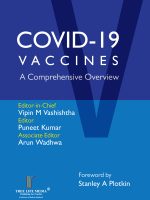
COVID – 19 VACCINES A Comprehensive Overview
₹1,595.00We are amid a pandemic that continues to smoulder almost everywhere with raging fire off and on at different places. It has not only devastated hundreds of thousands of families who lost someone to the virus and affected over 300 million people directly, it has affected all 7.9 billion of us in some way or other. At the same time, humanity has risen well to the pandemic challenges. It was realized very early during the current outbreal that safe and effcacious vaccines would be crucial in tackling the pandemic. The unprecedented global collaboration among all stakeholders: Scientists, pharmaceutical industry, funding agencies and Governments demonstrated what a global will could do: hundreds of vaccine candidates developed, and vaccine deployment started within 12 months of isolation of new virus something that takes over a decade otherwise.
-
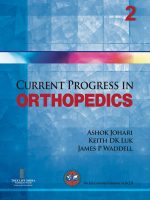
Current Progress in Orthopedics Volume 2
₹1,500.00This textbook represents the second text from the Editors who have invited a panel of distinguished authors with international reputations to present the current state of the art in orthopedic surgery. There is more awareness of musculoskeletal disease as a cause of disability in every country and as governments and non-governmental organizations move to address this problem there is increasing recognition of the importance of orthopedic surgery in dealing with musculoskeletal disease. The entire spectrum from congenital abnormalities through pediatric musculoskeletal illness, trauma, sports and degenerative diseases have been covered in this volume. This is the companion volume to the first published two years ago and we anticipate further volumes in the future as we attempt to address the ever expanding role of orthopedic surgery in modern healthcare.
-
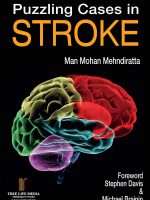
Puzzling Cases in Stroke
₹1,250.00Stroke is the leading cause of permeant disability , including post stroke dementia, pain, depression and personality changes. While large Clinical Trials reflect information about large stroke populations, the presentation of each and every stroke patient is individual and special. Currently there are only few books which illustrate case oriented discussion. This is unique book which includes common and unusual case of stroke, so as to reinforce diagnostic skills through careful analysis of individual presenting patterns, and to guide treatment decisions.
-
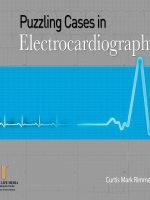
Puzzling Cases in Electrocardiography
₹775.0012 Lead Electrocardiography remains as clinically relevant now as when first introduced to clinical medicine decades ago. The value of 12 Lead ECG is mattering the ability to integrate the ECG findings into information provided by the history and Physical Examination. The book authored by Prof Rimmerman, one of the foremost Cardiologists in the world follows 50 ECG Case Studies purposefully chosen where the ECG made a clinical impact on the management of the patient
-

Current Progress in Obstetrics and Gynecology – Volume 5
₹1,225.00In its 5th Volume the now CLASSIC comes with a value addition in the form of Multiple Choice Questions, which would highly beneficial to one and all. The Editors have gathered an ensemble of acclaimed clinicians giving an insight to various key aspect in Obstetrics and Gynaecology.
-

Puzzling Cases in Pediatric Dermatology Volume 1
₹995.00The book covers 30 Unique Cases in Pediatric Dermatology written by some of the Leading Experts. The book would be highly useful to all Dermatologists, Pediatricians, Consulting Physicians, Post Graduate Students and those interested in treating Children with Dermatological Conditions
-

Clinical Pediatric Dermatology
₹1,350.00This book aims at bridging that gap and putting the basic concepts of pediatric dermatology together which help the dermatologists,post graduates and pediatricians understand and manage the pediatric dermatoses in India. With primary focus on beginners in pediatric dermatology and pediatricians,the conciseness and brevity of clinical notes has not been compromised. This book has been written keeping in view the interests of both pediatric dermatologists and pediatricians. In this era of sub-specialization, general pediatricians who offer primary care to children must be knowledgeable in pediatric dermatological problems.
Be the first to review “Puzzling Cases in Vertigo & Dizziness”